The Truth About “Tier 1” Solar Panels – Don’t Fall for the Marketing
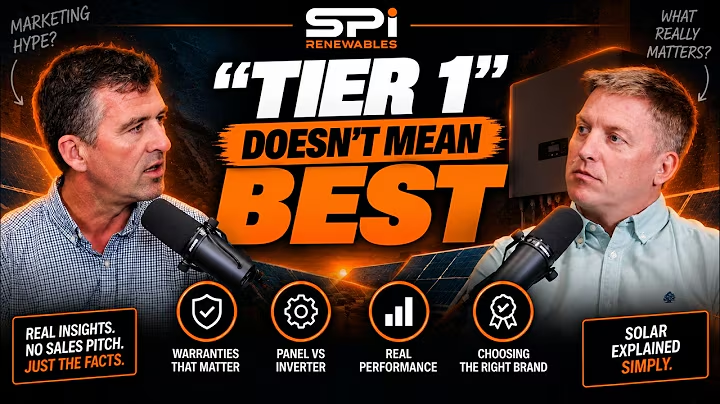
Charged Up Episode 7: What this episode covers
- What “Tier 1” actually means
- Why the biggest advertised brand isn’t necessarily the best
- Whether a 40-year warranty really means anything
- Performance warranties and panel degradation
- Why inverter choice could matter MORE than panel choice
- String inverters vs microinverters and optimisers
- The hidden downside of equipment mounted on your roof
- Ethical sourcing and traceability
- Why all-black solar panels can perform differently
- How marketing influences both customers and installers
- The questions you should ask before choosing a system
You’ve been told to buy “Tier 1” solar panels… but what does Tier 1 actually mean?
With more than 100 solar panel and inverter manufacturers competing for attention, choosing the right hardware can quickly become confusing.
In this episode of Charged Up, Simon Wray and Justin Canning cut through the marketing and explain what homeowners and businesses should actually look for when comparing solar brands.
One of the biggest misconceptions? Tier 1 doesn’t necessarily mean better quality.
Tier 1 is largely a measure of a manufacturer’s financial strength, track record, production scale and bankability. It can be useful — particularly on large, financed solar projects — but it doesn’t automatically tell you which panel will perform best on your roof.
The takeaway is simple: don’t choose solar hardware based purely on a logo, headline efficiency figure or “Tier 1” badge.
Understand why your installer is recommending that particular equipment — and make sure the system is right for your property, budget and long-term requirements.
Want to find out more? Whether you’re looking for commercial solar, battery storage, EV charging, or renewable energy solutions for your home or business, the team at SPI Renewables are here to help.
For more information or to enquire about any of our renewable energy services: Contact SPI Renewables